
The Builder and The Framer
It was 1981. A builder in Western Canada had spent the better part of the previous year riding the wave of a real estate boom. He had launched two duplexes — framing complete, drywall done, finishing work underway. The projects made sense when he started them. The numbers worked. The market was moving.
Then, almost overnight, it stopped moving.
What couldn't have been predicted was that within a matter of weeks, interest rates would surge from around 12% to over 22%. The homes that had looked like solid investments suddenly became nearly impossible to sell. Buyers evaporated. The market froze. And the builder was left standing in the middle of two nearly finished properties, with mounting debt and nowhere to go.
He had no choice but to remortgage his own home. The family home. The one his wife and children lived in.
Even that wasn't enough.
There were trades to pay — electricians, plumbers, painters — and not enough money to cover all of them. The largest outstanding bill, by far, was to the framing company. The crew that had done the bones of both buildings. The work was done. The debt was real. And the builder had no way to pay it.
So he did the only thing left to him. He sat down with the framer.
He laid it all out — the interest rate crisis, the remortgage, the shortfall. He didn't dress it up or manage the framer's perception of him. He just told the truth about where he stood.
The framer listened. And when the builder finished, he said something that changed everything.
"I trust you. I believe you will follow through on paying me — no matter how long it takes. I'm doing well right now, and I'm more than willing to carry this. Pay me when you can."
No contract. No collateral. No lawyers. No timeline. Just a man in a corner and another man who chose to believe him.
That single act of trust kept a family in their home. It spared a man the weight of bankruptcy. It allowed a life — and a family — to keep going.
That builder was my dad.
He told me that story more than once over the years — not as a tale of his own struggle, but as a testimony to what the human spirit is capable of when it defaults to trust over fear. That framer's trust didn't make headlines. But it rippled forward in ways he never could have known — into the home I grew up in, the family we became, and the person I'm still learning to be.
Why We’re Wired To Believe
What the framer did that day — extending trust to a man he barely knew, with nothing but character as collateral — turns out to be less remarkable than it feels. Not because it wasn't generous. It was. But because, as the psychologist Tim Levine has found after decades of research, it is simply what human beings do.
He calls it Truth Default Theory.
Our operating assumption, when we meet another person, is that they are telling the truth. We don't start from suspicion and work toward belief. We start from belief and require mounting evidence to move us toward doubt. And even then — even when the evidence accumulates — we often resist the conclusion for longer than we should.
This is not a flaw. It is a feature.
Levine argues that the ability to cooperate, trade, build families, form communities, and organize societies all depends on this baseline posture of trust. Without it, every interaction would be paralysed by mutual suspicion. The cognitive load alone would be crushing. The social cost would be catastrophic.
The framer didn't extend trust to my dad despite being wired for it — he extended trust because he was wired for it. And that wiring is what makes civilization possible.
As Gladwell summarizes it in Talking to Strangers: occasional deception is the price of civil society. The vulnerability is not a bug. It's the cost of being able to function in community at all.
Trust is not naivety. It is the foundation on which all human connection is built.
When Trust Becomes a Liability
But here's where it gets complicated.
That same default — that beautiful, society-enabling impulse to believe — is also what every con artist, manipulator, abusive partner, and deceptive leader counts on. They don't break through our defences by force. They walk through the door we've already left open.
And the research is sobering about how long we keep that door open. We fall out of Truth Default Theory, Levine found, only when the case against our initial assumption becomes definitive. Not probable. Not likely. Definitive. We start by believing, and we stop only when our doubts rise to the point where we can no longer explain them away.
This means that clever deception doesn't need to fool us completely. It just needs to stay slightly below the threshold of 'definitive.' And skilled deceivers are extraordinarily good at managing that threshold — offering just enough of what we want to see to keep our doubts from reaching the point of no return.
Bernie Madoff ran a multi-billion dollar fraud for decades. Not because his victims were naive. Because he understood exactly how trust works — and he gave people just enough evidence of integrity to sustain their default belief.
The question isn't whether we should trust. We must trust. The question is what we're looking for when we decide who deserves it.
Love As The Lens For Trust
Here's what I've come to believe: trust is most wisely extended when it follows the evidence of love.
Not love as a declaration. Not love as charisma or confidence or the language of care. But love as a consistent, observable pattern of behaviour — showing up in the ordinary moments, under pressure, when it costs something.
What does that look like? A person whose life is rooted in love keeps their commitments. They are honest, even when honesty is inconvenient. They are patient with people who are slow, generous with people who have nothing to give them, humble about their own importance. They do not manipulate. They do not shame. They do not control.
These are not idealistic abstractions. They are observable. And when they're consistently present — across time, across context, across relationship — they tell us something reliable about who we're dealing with.
And when they're consistently absent? When patience gives way to contempt, when honesty bends to convenience, when generosity only appears when there's an audience? That tells us something too.
Love — lived consistently — is the most reliable trust credential there is. Not a guarantee. But a meaningful signal in an otherwise noisy landscape.
Three Ways To Extend Trust Wisely
Let time do its work.
Extend initial trust freely — it's what makes connection possible. But let time and repeated experience do the work of deepening it. Trust earns depth through consistency. Watch how someone treats people who can do nothing for them. Watch how they behave when they think no one important is watching. Watch what they do when keeping a commitment becomes costly. And watch what they ask of you — is it proportional to the depth of the relationship you actually have, or are they drawing from an account they haven't yet earned?Trust the pattern, not the performance.
Anyone can perform well on their best day. Anyone can appear generous, kind, and honest in an interview, a first date, or a public speech. What we're looking for is the pattern across ordinary days — what someone does habitually, reflexively, and especially under pressure. Performance fades. Pattern persists.Ask: Does this person leave me feeling more fully myself — or less? Relationships rooted in love tend to expand us. We feel more honest, more courageous, more kind in the presence of someone whose life radiates love. Relationships rooted in fear — even well-disguised fear — tend to contract us. We find ourselves editing, managing, shrinking. Pay attention to that contraction. It's telling you something important.
Trust is one of the most generous acts we are capable of as human beings. It is also, as my dad's story illustrates, one of the most transformative. We don't serve the world by becoming suspicious. We serve it by becoming wise — by learning to extend trust in the direction of love, and to slow down when love's fruit is conspicuously absent.
Until next week,
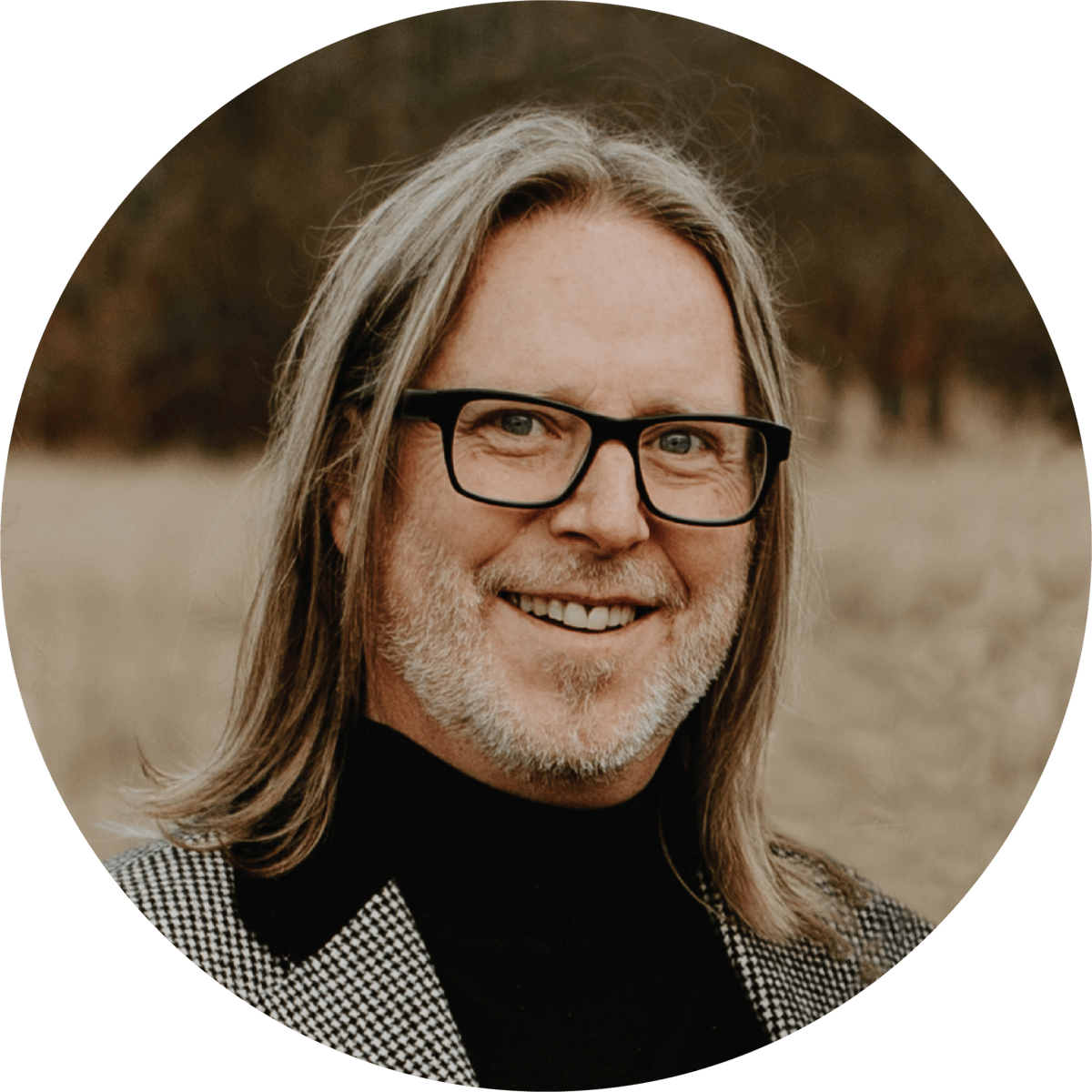
Jonathan Penner | Co-Founder & Executive Director of LifeApp

Who Can You Trust • 4 Part Series
This article is part 2 of a 4 part series entitled “Who Can You Trust”. Follow along as we discover more about trust, deception, lies, discernment, and love. Next week, we’ll explore how a single moment of pause can protect you from manipulation.
Read the previous articles here:

Resources To Dig Deeper

Book
The Speed of Trust
In The Speed of Trust, Covey challenges the idea that trust is soft, sentimental, or secondary to performance. Instead, he argues that trust is an economic driver — a measurable force that increases speed and reduces cost in every relationship and organization. When trust is high, communication flows, decisions accelerate, and collaboration deepens. When trust is low, everything slows down and becomes more expensive — financially and relationally. Covey offers practical frameworks for building credibility, restoring broken trust, and leading with integrity, making a compelling case that trust is not naïve vulnerability but one of the most powerful competitive and relational advantages we can cultivate.
-Stephen M.R. Covey

Music
Trustfall
Trustfall captures the tension at the heart of every meaningful relationship: the choice to move toward love even when safety isn’t guaranteed. The song doesn’t pretend the world isn’t bruised — “bloodshot eyes” and fear are real — but it refuses to let fear have the final word. A trust fall is not naïve optimism; it’s a conscious decision to lean into connection despite uncertainty. “What if we just fall?” becomes less a reckless question and more a courageous one. The song mirrors the central theme of trust: we don’t move toward one another because risk is absent. We move because love, when consistently lived, is worth the risk.
-Pink (3:54)